Earth Day’s call – Our Power, Our Planet – is a reminder that climate action is not just about ambition, but about who benefits. As countries step up their commitments in their updated National Determined Contributions (NDCs), the challenge is no longer to promise change, but to deliver it.
UN Women’s response is the Gender Equality and Climate Policy Scorecard, a practical tool to track whether climate policies are working for women and girls – and to turn commitments into action. It assesses the gender-responsiveness of climate policies across six dimensions: economic security, unpaid care work, gender-based violence, health, participation and leadership, and gender mainstreaming.
The Scorecard framework was first developed in 2024 in partnership with the Kaschak Institute, with the first analysis of 32 updated NDCs launched in November 2025. As the most widely available national climate plans, NDCs allow for comparative gender analysis across countries.
Most countries are taking gender-responsive action
To date, the Scorecard shows that more than three-quarters of NDCs acknowledge gender-specific climate risks and commit to gender-responsive action – but less than one-third do so comprehensively across five or six of the gender dimensions (see Figure 1). Economic security and participation are primary areas of action, but key social issues like unpaid care work, women’s health and gender-based violence remain relatively neglected.
Figure 1: Number of countries proposing measures, by number of gender dimensions addressed
To help fill these policy gaps, the Scorecard framework can be applied to a wide range of climate plans and policies as a source of good practices, to structure gender risk assessments and to scale-up gender-responsive climate policy design and implementation. Experiences in sub-Saharan Africa and Latin America show how the Scorecard’s flexible, multidimensional approach to gender analysis makes it a tool not only for monitoring policies, as originally coined, but for actively shaping them.
Designing gender-responsive NDCs in Africa
To support sub-Saharan African countries in designing more gender-responsive NDCs, UN Women developed a Toolkit on how to integrate gender in climate policies based on the Scorecard framework, that has been used to train 674 policymakers and advocates across 20 countries. In Liberia, Nigeria and Senegal, the toolkit was used to help stakeholders identify the gender co-benefits of climate strategies and to integrate gender priorities in NDC documents.
Liberia’s new NDC, for example, sets an ambitious target of a 64% reduction in emissions by 2035 and commits 20% of all climate finance to women-led cooperatives, smallholder farmers and entrepreneurs by 2035. It also establishes a multi-year “Women in Green Technology” project to support women’s access to jobs in renewable energy, sustainable waste management and climate-resilient enterprises.
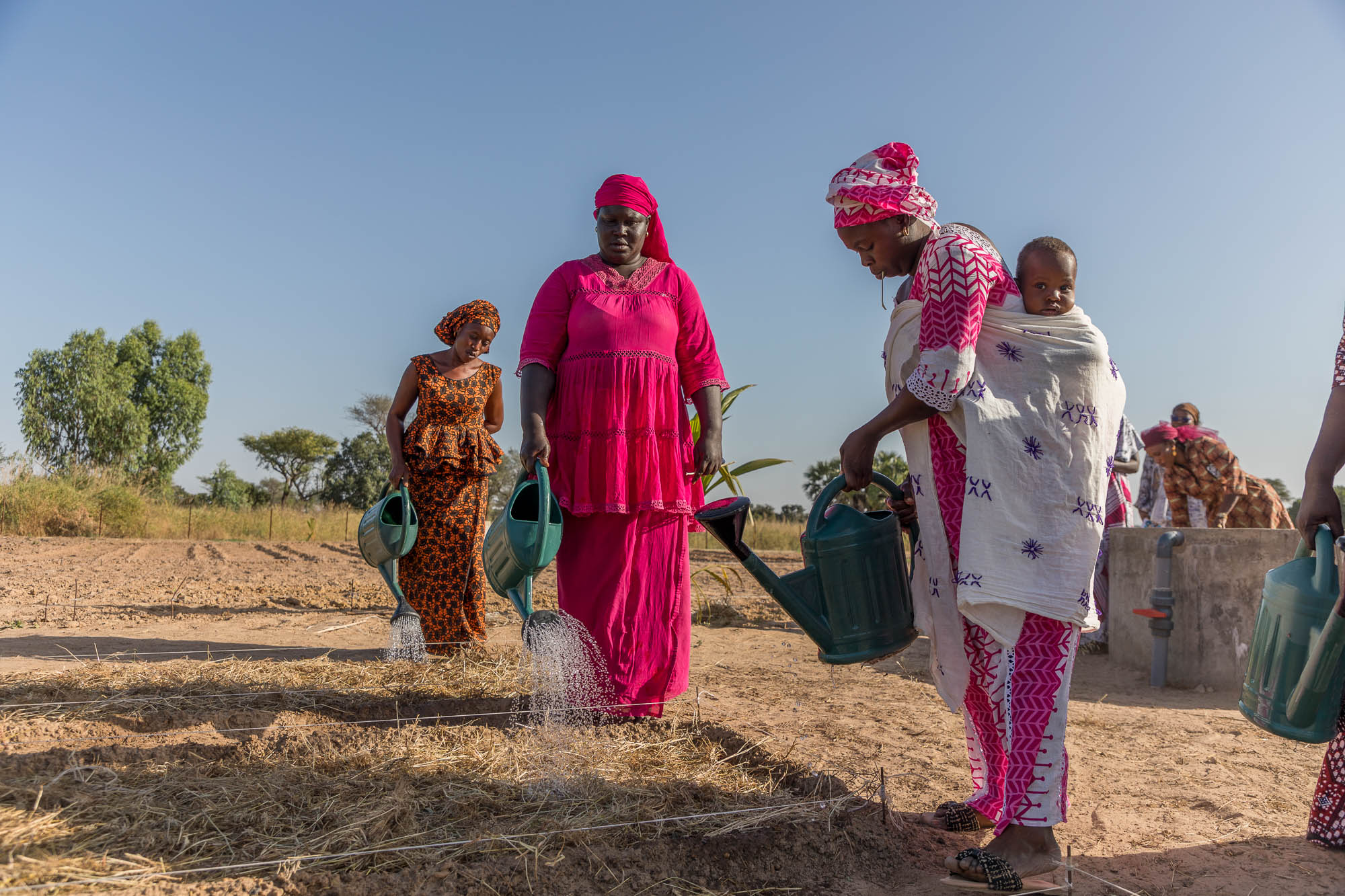
Photo: UN Women/Abdoul Ahad Thiam
The impact of the scorecard continues beyond the formulation of climate policies, with UN Women supporting governments on integrating unpaid care and domestic work in NDCs investment plans.
Promoting climate and gender policies in Latin America
Since 2024, UN Women has supported the Government of Bolivia to develop its first Gender Action Plan for Climate Change (GAPcc), through a broad, community-driven participatory process that engaged around 600 stakeholders – over 70% of whom were women. The Scorecard was used to organize consultations and strengthen the plan’s design and validation.
The Scorecard guided civil society consultations on the plan’s proposed actions, helping participants, including rural and indigenous women, identify how each action contributed to different gender equality outcomes, helping identify gaps and surfacing relevant issues, such as the impacts of climate-related water scarcity and extreme weather events on menstrual health and hygiene. This made visible challenges that had not been explicitly identified as priorities in Bolivia’s climate policy.
Following these consultations, the Scorecard dimensions were incorporated into the draft plan, strengthening its coherence and supporting ongoing validation and approval processes.
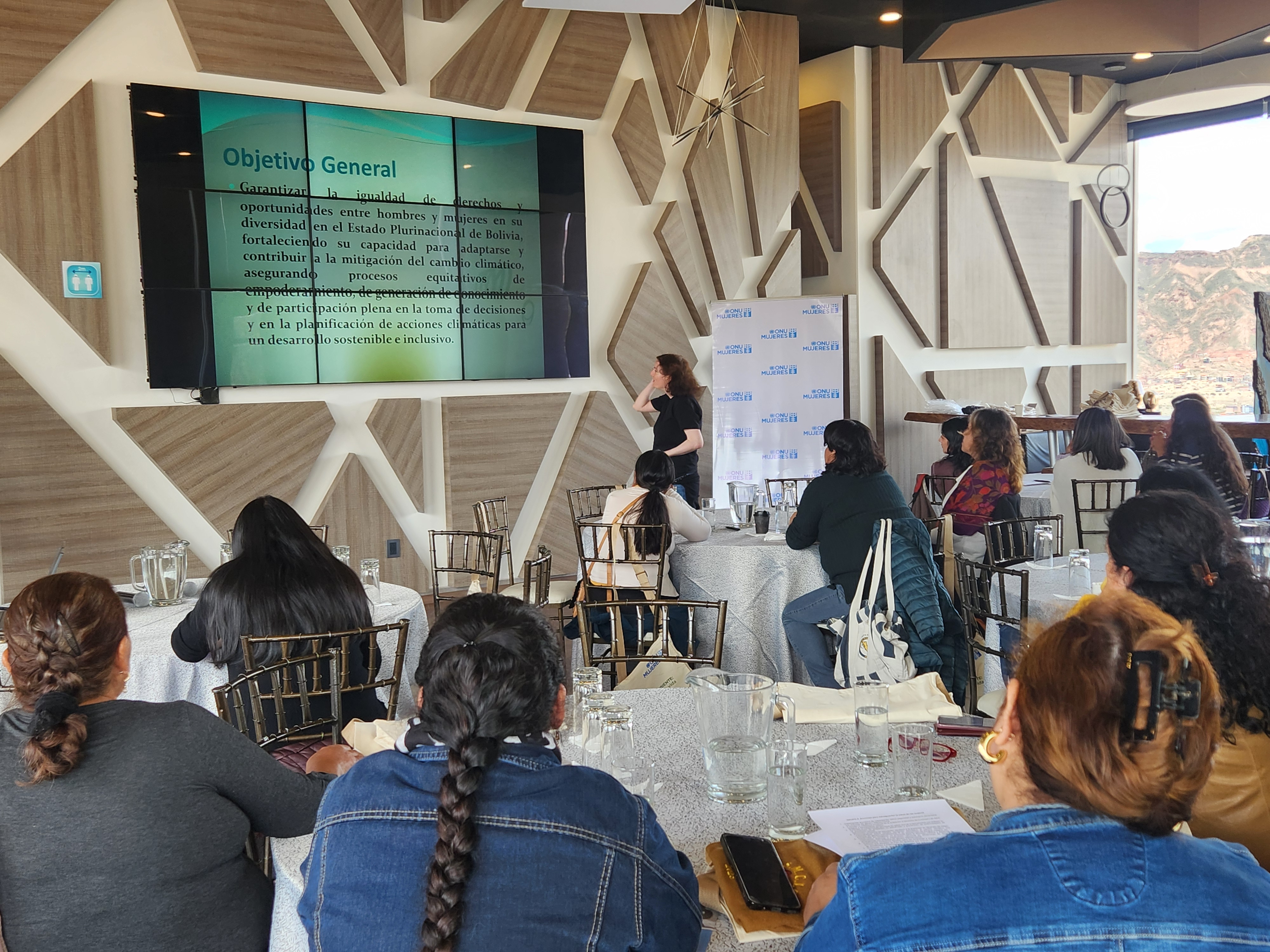
Consultations with civil society on Bolivia's Gender Action Plan for Climate Change. Photo: UN Women Bolivia Country Office.
In Chile, UN Women supported the integration of gender in five large-scale sectoral climate change plans, spanning water resources, biodiversity, energy, waste management and forestry and agriculture. The 2025 analysis shows that while all five plans incorporate gender to varying degrees, Chile’s National Adaptation Plan for the Forestry and Agriculture sector stands out for recognizing the links between climate adaptation, livelihoods, water management, unpaid care burdens and the leadership of rural women.
By helping to identify gender gaps and opportunities in each sectoral plan, the Scorecard spurred concrete recommendations to strengthen their gender-responsiveness. These ranged from integrating care-support measures into green jobs training and reskilling programmes in the energy sector – ranging from childcare and eldercare services, flexible schedules and quotas to support women caregivers; to establishing minimum protocols for safe participation in biodiversity adaptation planning, including practical checklists to ensure respectful engagement, confidentiality, prevention of harassment and “do no harm” principles.
What’s next: More countries, more accountability
This Earth Day, we celebrate countries’ growing recognition that climate action and gender equality are inseparable goals, and tools like the Scorecard are helping translate that recognition into policy action.
The Scorecard is expanding with updates planned for June and October 2026 to bring coverage to 100 countries, deepening the ability to track progress and push for more inclusive climate policies worldwide.
Acknowledgements
This analysis draws on insights generously shared by UN Women regional and country office colleagues: María Jesús Barrera, National Programme Coordinator, UN Women Chile; Joaquín Naranjo Palomeque, Specialist on Gender, Environment and Climate Change, UN Women Bolivia; Elana Ruiz, Regional Policy Advisor, Women’s Economic Empowerment, West and Central Africa Regional Office.
This work has been made possible thanks to the generous support of the Government of Denmark.