Back to Stories
Gender Snapshot for Europe and Central Asia: Are we on track to deliver for women and girls?
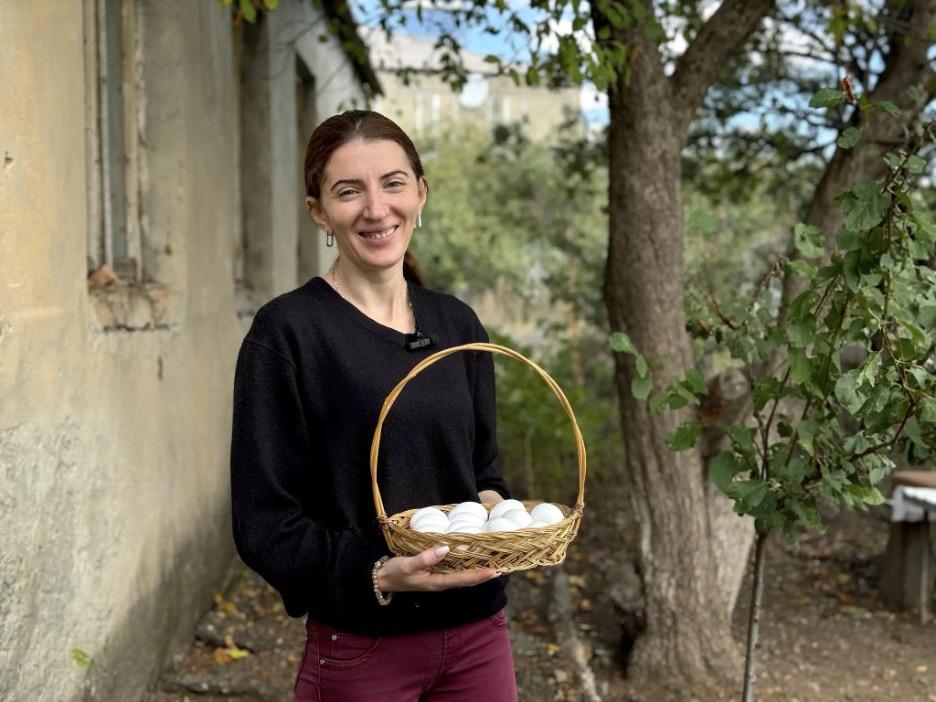
Varduhi Tsolakyan found the courage to leave her abusive marriage, rebuild her life and launch her own chicken farm in Getk Village, Armenia. Photo: UN Women

For Varduhi Tsolakyan, leaving an abusive marriage was only the first step towards security. With support from UN Women local partners in Armenia, she gained new skills and launched her own chicken farm, rebuilding her livelihood, creating a safer life and future for herself and her children.

Across Europe and Central Asia millions of women like her face intersecting barriers – violence, poverty, conflicts and climate shocks – that limit their choices and opportunities. The new Gender Snapshot for Europe and Central Asia reveals where gains have been made but where urgent action is still needed.

Progress on women’s health, but gaps remain

Women across the region are living longer but not always having healthier lives. The life expectancy at birth increased up to 6.6 years, from 71.1 years in 1995 to 77.7 years in 2024. Deaths from major illnesses like heart disease, cancer and diabetes have dropped from 23% in 2000 to 14% in 2021. And far fewer women now die during pregnancy or childbirth, with maternal mortality nearly halved between 2000 and 2020.

But not all women benefit equally. Rural women often travel long distances to see a doctor, while women with disabilities or from minority communities frequently encounter discrimination or services not meeting their needs. Although most countries formally guarantee sexual and reproductive health rights, one in three women still cannot fully make decisions about contraception, sexual relations or reproductive healthcare, and only 60% have their family planning needs met.

Figures

Girls excel in school, but barriers persist in STEM

Across the region, more girls complete secondary school than in the past, and at slightly higher rates than boys (80.6 vs. 79.4%). They outperform boys in reading and show comparable scores in math. These gains continue into higher education, where most university graduates are women (53.9%).

Yet women comprise only 38.4% of tertiary STEM graduates, while digital skills gaps limit their access to higher-paying jobs and the digital economy.

Still, 721,000 girls remain out of school, often due to early marriage or household responsibilities. In 2024, nearly twice as many young women aged 15–24 were not in education, employment or training (NEET) compared to young men (23.1 vs. 13.1%).

Figures

Women face workforce gaps, pay inequalities and limited leadership opportunities

Women are still far less likely than men to be in paid work (44.4 vs. 69.2%, respectively). Working women are more likely to have part-time or vulnerable jobs, without security or benefits. One of the major reasons is unpaid care: women spend 3.4 times more hours than men on such household work. The lack of affordable childcare makes this even harder, with early childhood education enrolment at just 39%.

Figures

Glass ceilings mean women hold only 32.9% of managerial positions and 16.1% of Chief Executive Officer roles. They also earn on average 20.4% less than men for the same or equivalent work.

Women are underrepresented in politics and leadership

Today, women hold 27.1% of parliamentary seats across the region, but only 17.4% of cabinet positions, mostly in social or “soft” portfolios rather than economic or security roles. While 10 of 17 countries have adopted electoral quotas, weak enforcement means these don’t always translate into equal representation. Deep-rooted attitudes persist, with 46% of women and 58% of men still believing men make better political leaders.

Figures

Violence against women remains widespread and underaddressed

Child marriage persists, particularly in Roma communities, with 1 in 10 women aged 20–24 married or in a union before age 18. One in four women aged 15–49 has experienced physical or sexual violence from an intimate partner over her lifetime. And in 2023, 6 in 10 women killed were victims of femicide.

More than half of women who use the Internet report experiencing technology-facilitated abuse. While laws exist in many countries, legal protections are uneven, and support services for survivors are often limited. Estimated annual economic losses range from EUR 33 million in Bosnia and Herzegovina to EUR 170 million in Ukraine and EUR 47.1 billion in Türkiye.  

Figures

Women are disproportionately affected by conflict, climate change and food insecurity

Russia’s full-scale invasion of Ukraine has displaced millions, with women and children accounting for 76% of refugees, exposing many to heightened risks of exploitation and sexual violence. Yet women remain largely excluded from peace negotiations and security institutions, weakening efforts to reflect their needs.

Climate change and disasters have left over 146,000 people dead or missing and affected 6.4 million between 2015 and 2021. Women – especially those working in agriculture – are disproportionately affected, often farming smaller plots, lacking secure land rights and facing lower productivity. Food insecurity among women has risen from 17.2% to 22.4% since 2017. Meanwhile, women’s participation in international climate negotiations dropped from 44.8% in 2010 to 33.2% in 2024.  

Figures

Taken together, these patterns show that despite progress, women across Europe and Central Asia continue to face systematic barriers to leadership, opportunity and safety – especially in times of crisis. Advancing gender equality requires strengthened laws and policies, gender-responsive budgeting, inclusive decision-making and targeted investments that support women not only as beneficiaries, but as leaders, innovators and key drivers of recovery and resilience.

Written By:
Meriza Emilbekova

Meriza Emilbekova is a Communications Analyst at the UN Women Regional Office for Europe and Central Asia. She has more than 10 years' experience in various areas of development, including on gender equality, sustainable development and public finance management. She holds a Master’s degree in Gender, Violence and Conflict from the University of Sussex, UK.

Ani Hovhannisyan Photo

Ani Hovhannisyan is a Communications Consultant at UN Women Armenia and Regional Office for Europe and Central Asia. She brings over a decade of experience at the intersection of journalism, media development, and communications. A Fulbright Scholar, she holds an M.S. in Media and Communication from West Virginia University and an M.A. in Media and Management from the Georgian Institute of Public Affairs.

Explore the Data

Learn more about our data resources, why data is missing, and explore our multiple data dashboards to learn more about gender statistics.