From birth naming practices to the normalization of violence, a regional data art initiative reveals how gender inequality is learned, lived and sustained – and how data can disrupt that cycle.
Ideas about a woman’s worth, role and limits may already be taking shape even before she’s born, rooted in everyday language, societal and family roles and expectations passed down from one generation to the next.
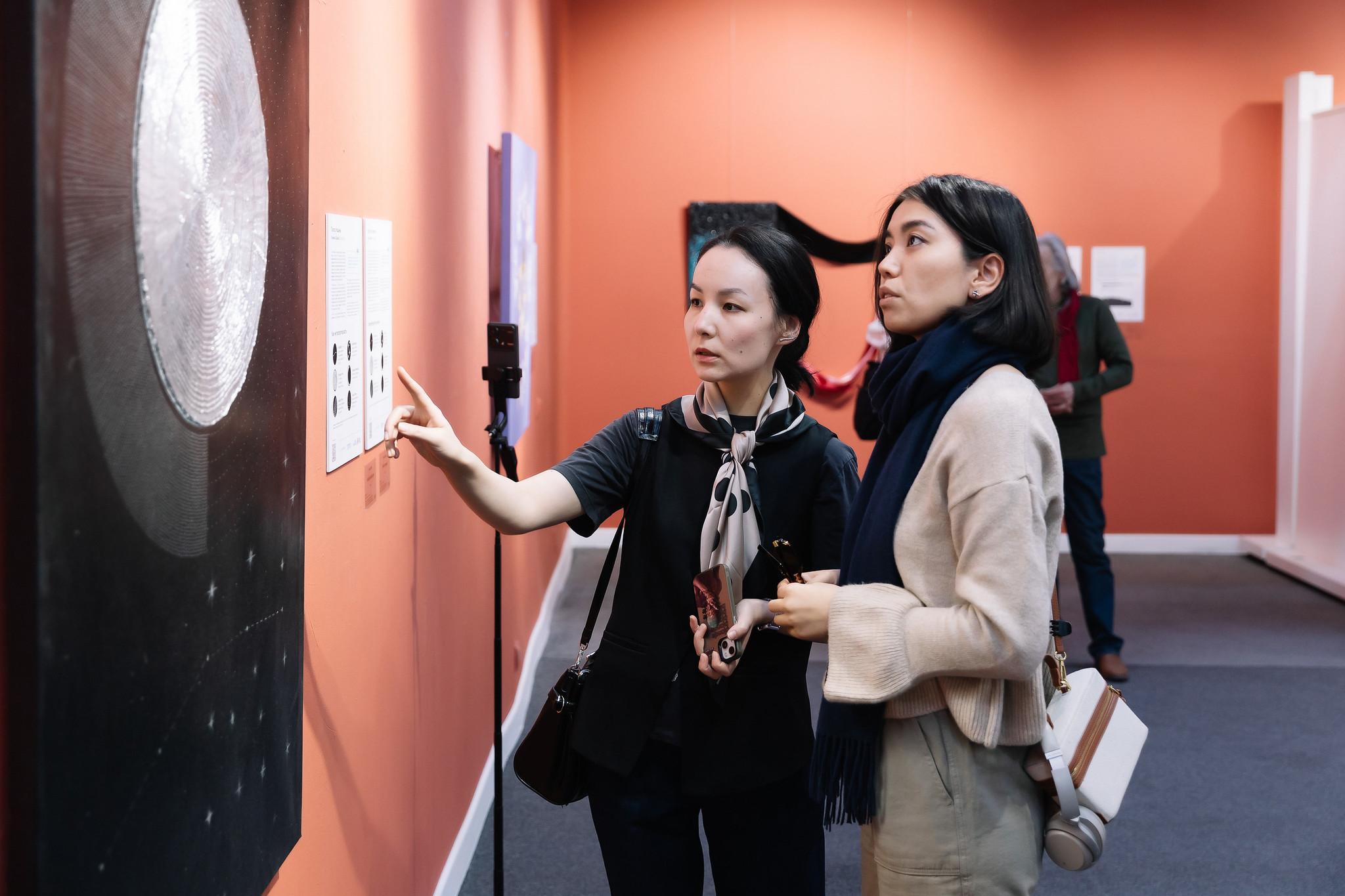
This truth underpins “Tirek: The Thread of Her Life”, a data art and creative storytelling initiative in Europe and Central Asia led by Women Count and the School of Data (based in Kyrgyzstan). Through 14 artworks created from statistics, the initiative traces how gendered social norms shape women’s life cycle.
Its title, Tirek – meaning “pillar”, “backbone” or “foundation” in Turkic languages – reflects the roles women often assume under the weight of social norms. Tirek can also refer to a poplar tree, known for its deep and powerful roots – a metaphor for resilience and inner strength.
By translating gender data into textiles and material art often considered the domain of women, the project exposes gender inequality as a continuous system learned early, reinforced daily and normalized over time.
While the collection spans various issues – including the pay gap, gendered career pathways, maternal mortality and femicide – three artworks illuminate how harmful social norms impact women’s lives: QizUl: Girl or Boy?, Illusion of Balance and Bitter Truth.
QizUl: Girl or Boy?
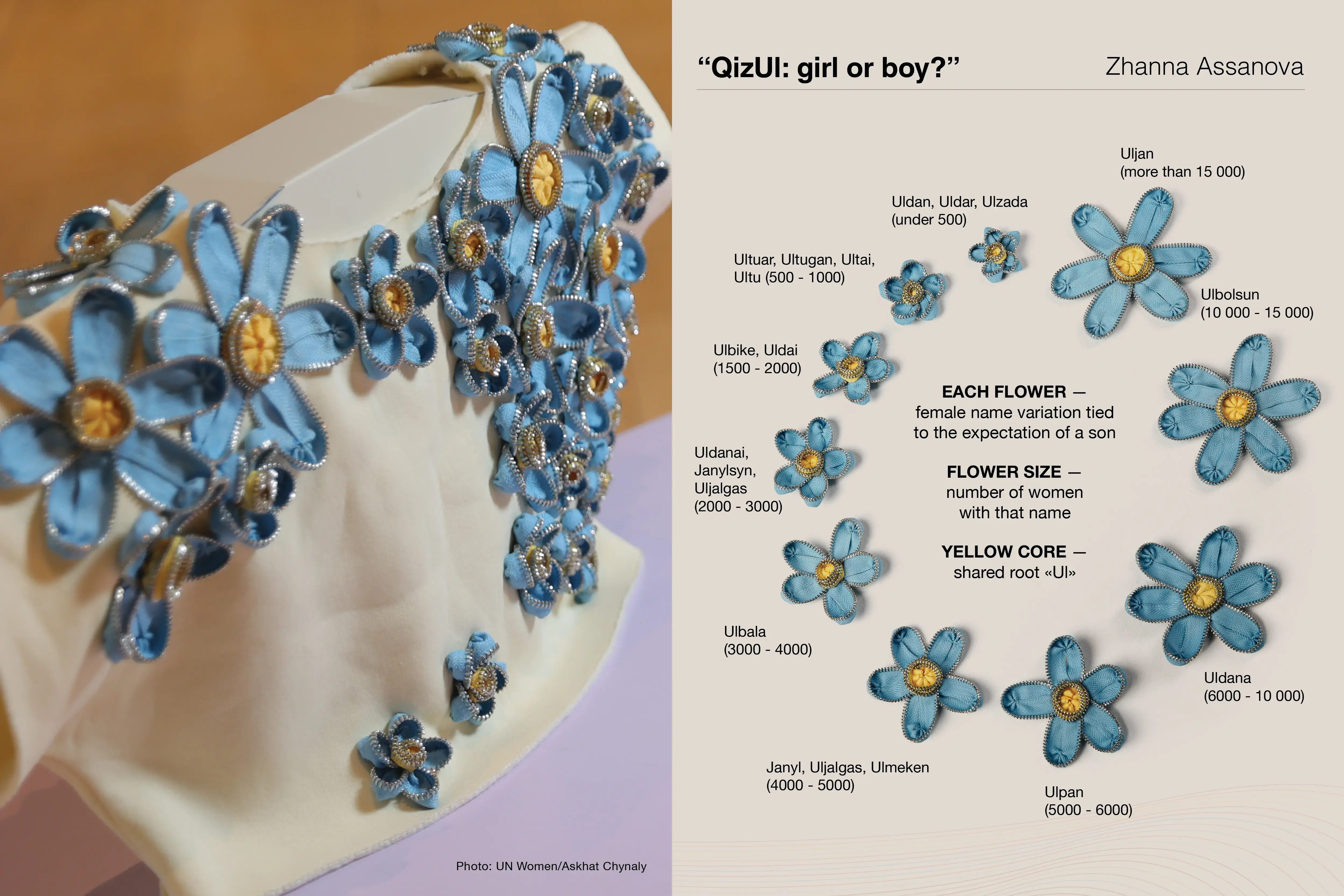
In Kazakhstan, over 82,000 girls are given names that translate as “enough,” “second choice,” or “hoping for a boy.”
QizUl: Girl or Boy? visualizes the thousands of women whose names suggest their value was questioned from birth. The piece confronts viewers with the uncomfortable truth that son preference is deeply embedded.
Artist Zhanna Assanova, who created the work, shared that after the exhibition some women began changing their names. These acts were deeply personal, but symbolically powerful: small ruptures in a norm that is rarely questioned.
Illusion of balance
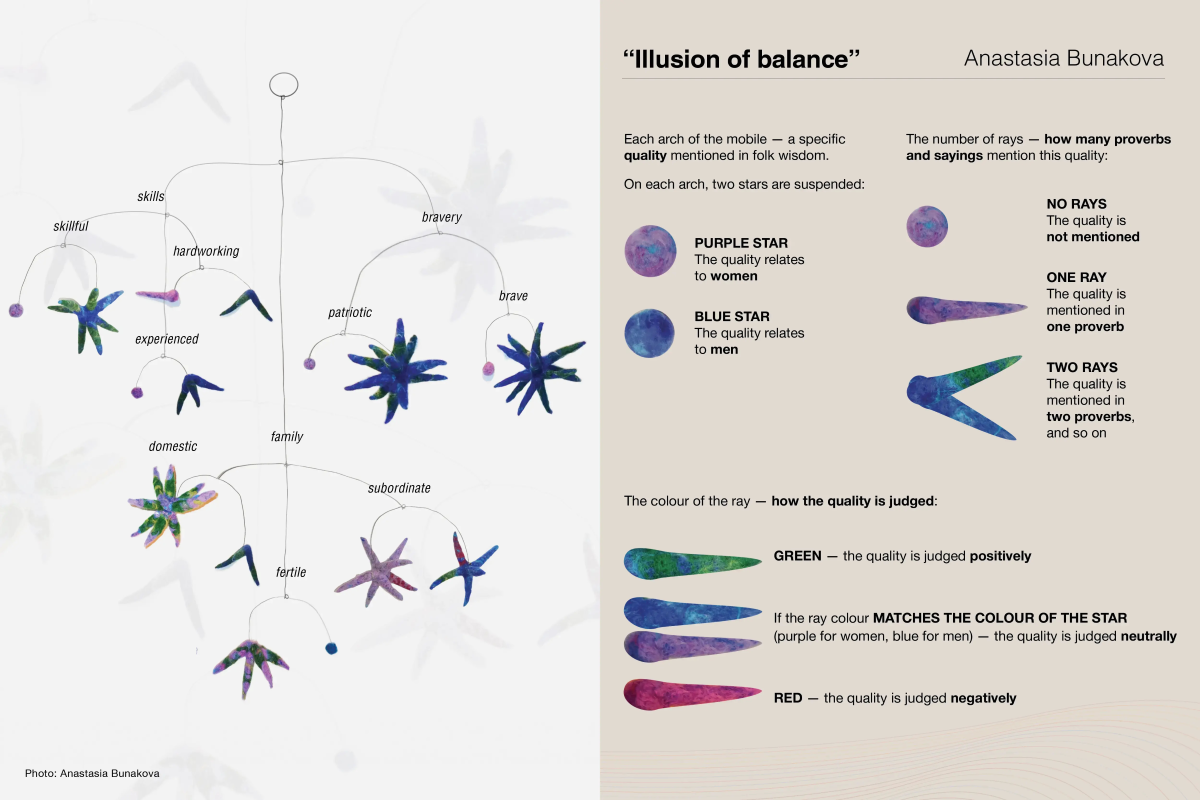
Drawing on 195 traditional proverbs and sayings about women, marriage and family harmony, the installation exposes ingrained cultural codes that teach women to endure, remain silent and obey. What makes this especially insidious is that women are often expected not only to follow these rules, but to enforce them – telling daughters, sisters and friends not to “bring shame,” “disturb the peace,” or “break the family.”
Kazakhstani human rights defender and influencer Aitbek Amangeldy describes the piece as one of the most powerful because it implicates society as a whole.
“These sayings weren’t written by one person,” he explains. “They are our collective creation. And they programme us – men and women – into believing that a woman’s role is to be domestic, obedient and endlessly resilient.”
Passed along over tea and everyday family conversations, these beliefs quietly settle into daily life through son preferring names, sayings and stories, embedding gendered roles from an early age.
Bitter truth
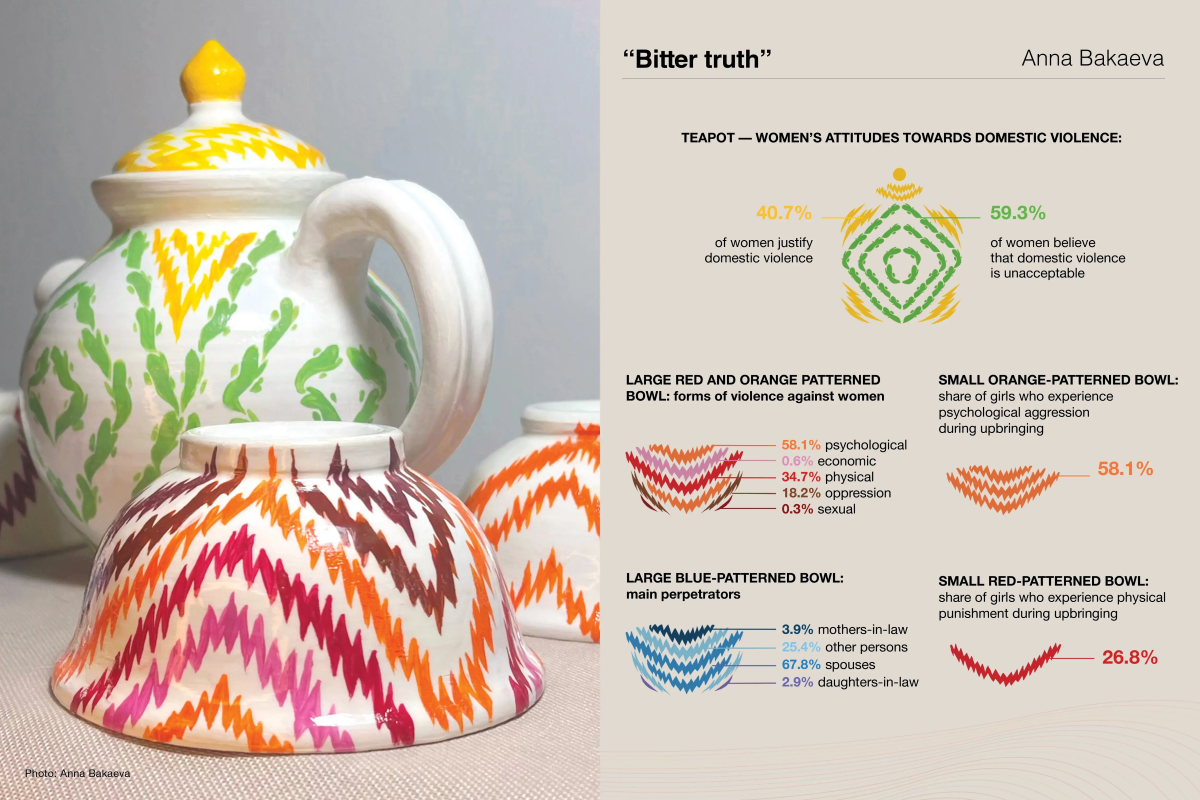
Bitter Truth – artwork built on survey data about social attitudes towards domestic violence – visualizes how women and men justify violence under certain conditions, excuse perpetrators or place responsibility on survivors.
It features a ceramic teapot and bowls, symbolizing family comfort in Central Asia – underlining why violence persists.
“Tea is a symbol of communication in many Central Asian countries,” explains artist Anna Bakaeva, “but for many women, no amount of tea can soften a home shaped by violence. ‘Bitter Truth’ reveals these realities and calls us to change our attitudes.”
Seen together, Illusion of Balance and Bitter Truth tell a devastating story: when women are taught from childhood to endure, violence is normalized.
Data and art as tools for change
The power of the initiative lies in how statistics are communicated.
School of Data, a regional partner of the initiative, helped artists navigate gender statistics and transform data sets into compelling visual narratives. “Gender data often stay trapped in reports,” explains co founder Altynai Mambetova. “Art brings them into public spaces. It allows people to feel the scale of inequality, not just understand it intellectually.”
Across the region, participating artists described profound shifts in their own practice. Many now treat data as primary artistic material – researching deeply and grounding creative expression in evidence. Several continue creating new data art projects, exhibitions, workshops and educational initiatives.
Visitors, too, processed the works personally, noting that topics such as violence, stereotypes and gender roles are rarely discussed openly in creative industries. Others spoke of the emotional weight of the works and their potential to transcend the exhibition space.
As one visitor put it: “I really hope that when people see and live through these images, they will carry these meanings forward to their children, family and friends, and that something will change.”
Presented in Kazakhstan and Kyrgyzstan, “Tirek: The Thread of Her Life” attracted over 6,000 visitors, while the broader campaign reached more than 400,000 people through digital platforms, media and outreach.